
In cities like Zurich, people live side by side for years without knowing each other. You might greet each other in the stairwell. But you don't really have anything to do with one another.
That's a shame. Not just because it can feel lonely, but because we're missing out on what a neighborhood could be.
What Happens When Neighbors Share
A few months ago I gave away my old kitchen table. The woman who picked it up lives two streets over. We didn't know each other before. Since then we greet each other when we cross paths. Once we had a brief chat.
That sounds like very little. But in an anonymous big city, it's a lot.
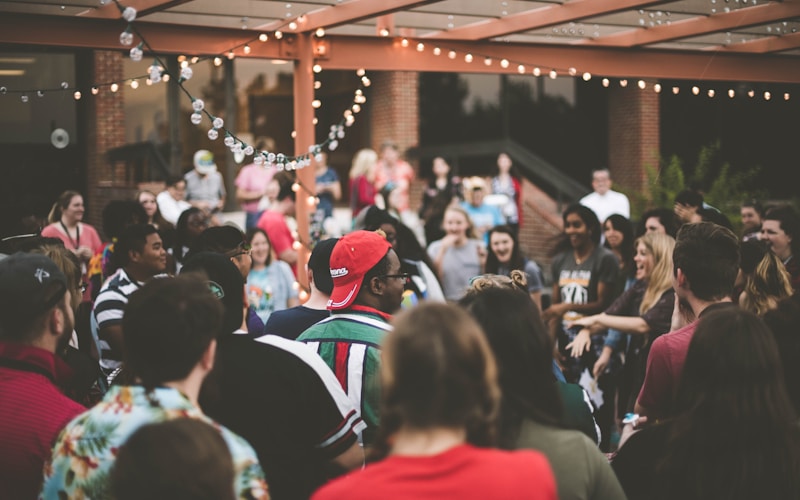
Every time something is exchanged or given away locally, a small connection is created. Maybe superficial, but real. And from many small connections, a network eventually forms.
Why Local Is Better Than Anonymous
You can bring your old things to the Brockenhaus (thrift store) or to an anonymous collection point. Nothing wrong with that, it's better than throwing them away.
But when you give them to someone from the neighborhood, more happens. You see that someone is happy. You know that your old chair now stands in an apartment around the corner. The item gets a story.
For the recipient, it's also different. A table from the thrift store is anonymous. A table from the neighbor has an origin, a connection.
That's not a difference you can measure in numbers. But you can feel it.
The Logic of Short Distances
There are also practical reasons for local sharing.
Transport becomes easier. If the item is 500 meters away, you can fetch it on foot. No car needed, no parking stress, less CO2.
Coordination is easier. If both people live in the same neighborhood, it's quicker to find a time that works for both.
And if something goes wrong – the item wasn't as described, the timing didn't work out – the barrier to resolving it is lower. You live nearby, after all.
How Sharing Builds Trust
In a functioning neighborhood, people help each other. You watch the apartment when someone's on vacation. You lend tools. You check on the elderly neighbor.
But that only works when you know and trust each other.

Sharing is a low-threshold way to build that trust. It's concrete, it's non-committal, it requires no big commitment. But it opens doors.
The neighbor you gave a chair to last year might become the neighbor who helps you move. Not guaranteed, but possible.
The Swiss Particularity
In Switzerland, neighborhood culture varies greatly by region.
In rural areas, people often still know each other. The village community works, people help out, they lend and share.
In the cities, it's more anonymous. People come from everywhere, they move frequently, turnover is high. Real neighborliness has to be actively built.
That's a challenge, but also an opportunity. Anyone who wants community in a city has to create it themselves. Sharing is a start.
Beyond Material Benefit
It's not just about saving money or getting stuff. It's about something bigger.
Humans are social beings. We need connections, belonging, the feeling of being part of something. In a world that's becoming increasingly individualistic, local communities offer a counterbalance.
When I know that people who think similarly live around me – who'd rather share than throw away, who value sustainability, who are open to contact – then I feel less alone.
That might sound a bit grandiose. But I mean it.
How You Can Get Started
If this speaks to you and you want more neighborliness in your life, here are a few ideas.
Start with sharing. When you want to get rid of something, offer it locally first. On Pikitup you can see who's near you. Maybe your next pickup person is your neighbor.
Be open when picking up. When you pick something up, take a moment for a brief conversation. Not pushy, but friendly. "Thanks, this thing is exactly what I was looking for. Have you lived here long?"
Take the first step. If you see a neighbor moving, ask if you can help. If you've cooked too much, ring the doorbell next door and ask if anyone wants some. Small gestures, big impact.
Conclusion
Neighborly help isn't a nostalgic ideal from a bygone era. It's a conscious decision about how we want to live together.
Sharing is a simple entry point. It costs nothing, it helps others, and it creates connections. All good reasons to do it.
On Pikitup we're trying to promote exactly that. Share locally, connect locally. Stop by – maybe you'll find not just a new item, but also a new acquaintance.
What's the neighborhood like where you live? Write to me – hello@pikitup.ch